
Article Written by VIKKAS RANA
Introduction
Every child deserves to grow up in an environment where they feel safe, valued, protected, and heard. Yet, millions of children around the world continue to face unimaginable challenges—from abuse and neglect to bullying, exploitation, mental health struggles, cyber threats, and domestic violence.
For many of these children, finding someone they can trust may seem impossible.
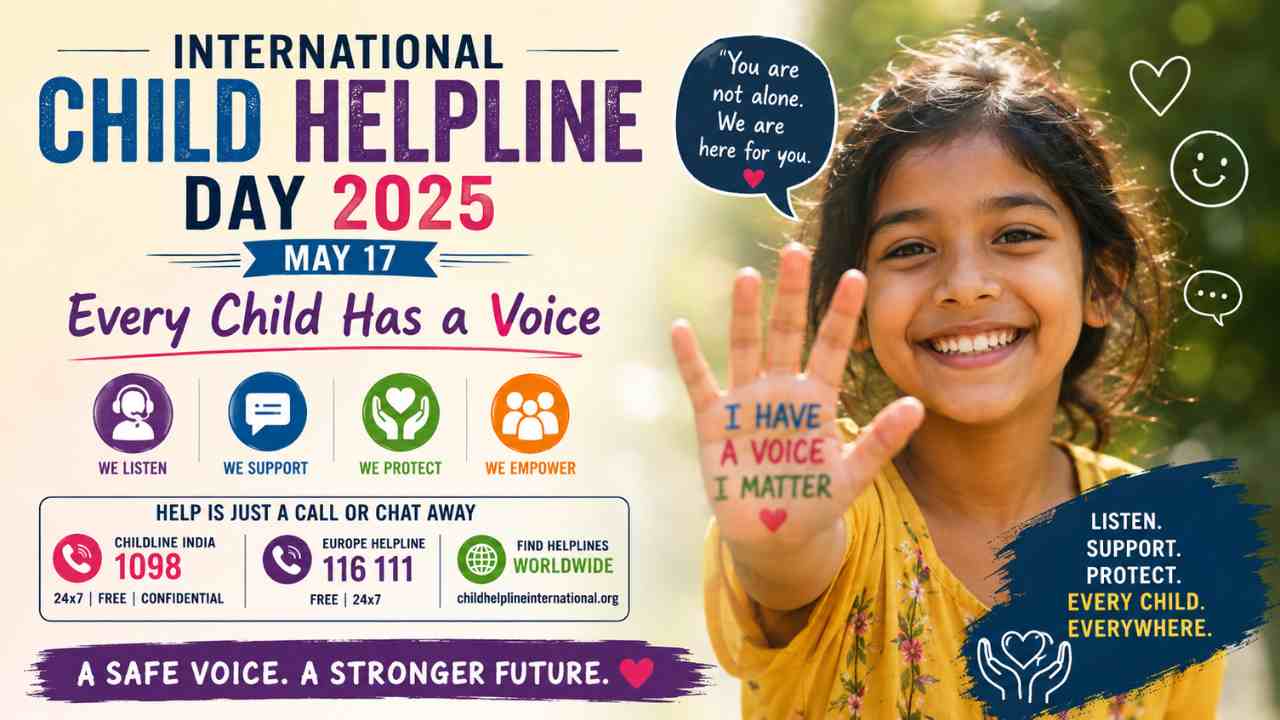
This is where International Child Helpline Day 2025, observed every year on May 17, becomes incredibly significant. It is a global movement dedicated to recognizing the life-changing work of child helplines and promoting every child’s right to seek help without fear or judgment.
The theme for International Child Helpline Day 2025 is:
“Every Child Has a Voice.”
This powerful message reminds governments, communities, educators, parents, and organizations that every child deserves to be listened to, respected, and protected.
Child helplines are much more than emergency phone numbers—they are lifelines that provide emotional support, crisis intervention, legal guidance, counseling, and hope for millions of children worldwide.
In this comprehensive guide, we’ll explore:
- What International Child Helpline Day is
- Why child helplines matter
- How children across the world can access help
- The global impact of child helplines
- The life-changing benefits they provide
- How every individual can contribute toward protecting children
What is International Child Helpline Day?
International Child Helpline Day is observed annually on May 17 to celebrate the dedication of child helpline organizations, volunteers, counselors, and child protection professionals across the globe.
The day aims to:
- Raise awareness about children’s rights
- Promote safe reporting channels
- Encourage children to speak up
- Recognize child helpline workers
- Expand access to child protection services worldwide
The initiative is strongly supported by global organizations working to ensure that every child—regardless of nationality, race, gender, economic status, or background—has access to immediate assistance whenever they need it.
Why Child Helplines Are More Important Than Ever
Today’s children face challenges that previous generations never imagined.
Besides traditional concerns like family conflicts or abuse, modern children must also navigate:
- Cyberbullying
- Online predators
- Social media pressure
- Depression
- Anxiety
- Academic stress
- Loneliness
- Digital addiction
- Identity struggles
- Human trafficking
- Child labor
- Forced marriage in some regions
Many children remain silent because they fear punishment, embarrassment, or disbelief.
Child helplines provide a confidential, judgment-free environment where children can safely express their concerns.
Sometimes, one compassionate conversation can completely transform a child’s future.
The Global Reach of Child Helplines
Today, child helplines operate in over 135 countries, providing free and confidential support to children 24 hours a day.
These services assist millions of children every year through:
- Phone calls
- SMS services
- Online chats
- Mobile applications
- Social media platforms
- Community outreach programs
One of the leading organizations supporting this global movement is Child Helpline International (CHI), headquartered in the Netherlands.
The organization coordinates an international network of child helplines working together to ensure that children’s voices are heard across continents.
Their member organizations collectively handle millions of contacts annually, offering guidance on issues such as:
- Abuse
- Neglect
- Violence
- Family problems
- Bullying
- Mental health
- Online exploitation
- Child marriage
- Homelessness
- Education challenges
Despite remarkable progress, over 40 countries still lack a national child helpline, leaving millions of vulnerable children without immediate access to professional support.
International Child Helpline Day calls on governments and organizations worldwide to close this gap by 2030.
Every Child Has a Voice: The 2025 Theme Explained
The 2025 theme—
Every Child Has a Voice
—is rooted in one simple but powerful belief:
Every child deserves to be listened to.
Every opinion matters.
Every fear deserves attention.
Every cry for help deserves a response.
Children are not merely future citizens.
They are individuals with rights today.
When adults actively listen to children, they:
- Prevent abuse
- Build trust
- Improve mental health
- Strengthen families
- Create safer schools
- Build healthier communities
Listening is one of the greatest forms of protection.
How Children Around the World Can Access Child Helplines
Modern child helplines are designed to be accessible for children from all backgrounds.
1. Toll-Free Phone Calls
Most countries operate free child helpline numbers available 24 hours a day.
Some examples include:
- CHILDLINE 1098 – India
- 116 111 – Many European countries
- National child helplines across Asia, Africa, Australia, and the Americas
Children can simply call without worrying about call charges.
2. SMS and Text Messaging
Many children feel more comfortable typing than talking.
Helplines now offer:
- SMS conversations
- WhatsApp support (where available)
- Secure text messaging
- Confidential digital communication
This option is especially useful for children experiencing:
- Domestic abuse
- Online harassment
- Anxiety
- Depression
3. Online Chat Services
Web-based chat platforms allow children to connect anonymously with trained counselors.
Benefits include:
- Privacy
- Immediate support
- Emotional counseling
- Safety planning
4. Mobile Applications
Several countries now provide dedicated child support apps.
These apps allow children to:
- Chat instantly
- Report abuse
- Learn about children’s rights
- Access emergency contacts
- Find nearby support services
5. Social Media Support
Recognizing that today’s youth spend significant time online, many helplines actively engage through:
- Messenger
- Other secure digital platforms
These channels increase accessibility for digitally connected children.
6. Multilingual Assistance
Language should never become a barrier to seeking help.
Many child helplines provide support in multiple languages.
Examples include:
India
Support may be available in:
- Hindi
- Bengali
- Tamil
- Telugu
- Marathi
- Kannada
- Gujarati
- Malayalam
- Punjabi
- Other regional languages
South Africa
Support often includes:
- Zulu
- Xhosa
- Afrikaans
- English
- Additional local languages
This ensures children from diverse communities can communicate comfortably.
7. Community Outreach Programs
Not every child has internet or mobile access.
Therefore, many organizations partner with:
- Schools
- NGOs
- Community centers
- Local governments
- Health workers
These outreach initiatives educate children about:
- Their rights
- Personal safety
- Reporting abuse
- Mental health
- Available support services
8. Emergency Crisis Intervention
When children face immediate danger, helplines coordinate with:
- Police
- Child protection agencies
- Social workers
- Medical professionals
- Emergency shelters
Rapid intervention can save lives.
Common Reasons Children Contact Helplines
Children seek support for many different reasons.
Some of the most common include:
- Physical abuse
- Emotional abuse
- Sexual abuse
- Bullying
- Cyberbullying
- Depression
- Anxiety
- Self-harm thoughts
- Family violence
- Neglect
- Child labor
- Child trafficking
- Forced marriage
- School-related stress
- Relationship problems
- Identity issues
- Loneliness
- Substance abuse in the family
- Homelessness
No concern is considered too small.
Every child deserves to be heard.
The Life-Changing Benefits of Child Helplines
Safe and Confidential Support
Children often hesitate to discuss sensitive issues.
Helplines provide:
- Privacy
- Respect
- Compassion
- Professional guidance
This creates trust during vulnerable moments.
Mental Health Care
Mental health challenges among children continue to rise worldwide.
Helplines offer:
- Emotional counseling
- Coping strategies
- Stress management
- Suicide prevention support
- Trauma-informed care
Early intervention significantly improves long-term well-being.
Protection from Abuse
Helplines serve as the first line of defense against:
- Domestic violence
- Sexual exploitation
- Child trafficking
- Online grooming
- Physical abuse
Professionals connect children with appropriate legal and protective services.
Empowering Children’s Rights
Every conversation reinforces an important message:
Your voice matters.
Child helplines uphold the principles established under the UN Convention on the Rights of the Child, encouraging participation, dignity, and protection.
Accessible for Everyone
One of the greatest strengths of child helplines is accessibility.
Most services are:
- Free
- Available 24/7
- Confidential
- Child-friendly
This removes financial barriers for vulnerable families.
Preventing Future Crises
Early intervention often prevents problems from escalating.
A child struggling with bullying today may avoid:
- Severe depression
- School dropout
- Self-harm
- Long-term trauma
Timely conversations save lives.
Building Confidence and Resilience
Helplines don’t simply solve immediate problems.
They teach children:
- Problem-solving
- Emotional regulation
- Self-confidence
- Healthy communication
- Decision-making skills
These abilities remain valuable throughout life.
Informing Better Policies
Millions of anonymous conversations provide valuable data about emerging issues affecting children.
Governments and organizations use these insights to improve:
- Child protection laws
- Mental health services
- Education policies
- Internet safety initiatives
- Social welfare programs
Listening to children helps build better societies.
The Ripple Effect of Listening
One caring conversation can create lasting change.
A child who feels heard becomes more confident.
That confidence improves education.
Education strengthens opportunities.
Opportunities reduce poverty.
Reduced poverty strengthens families.
Strong families create healthier communities.
Healthy communities build stronger nations.
Listening to one child may ultimately improve countless lives.
That is the extraordinary ripple effect of child helplines.
How You Can Support International Child Helpline Day 2025
Everyone can contribute toward creating a safer world for children.
Raise Awareness
Share child helpline information through:
- Social media
- Schools
- Local organizations
- Community events
Use hashtags such as:
- #ICHDay2025
- #EveryChildHasAVoice
- #ChildHelplines
- #ProtectChildren
- #ChildRights
Volunteer
Many child helpline organizations rely on trained volunteers.
Support may include:
- Counseling
- Awareness campaigns
- Administrative assistance
- Community outreach
Donate
Financial contributions help expand:
- Technology
- Training
- Emergency services
- Outreach programs
- Rural accessibility
Every donation strengthens child protection systems.
Educate Children
Parents, teachers, and guardians should regularly discuss:
- Personal safety
- Trusted adults
- Online safety
- Emotional health
- Emergency contacts
Knowledge empowers children.
Advocate for Universal Access
Support campaigns calling for child helplines in countries where they do not yet exist.
No child should face a crisis alone simply because of geography.
A Future Where Every Child Is Heard
Imagine a world where every child knows exactly where to turn during moments of fear.
A world where no child feels invisible.
A world where asking for help is seen as courage rather than weakness.
International Child Helpline Day reminds us that this vision is achievable—but only through collective action.
Governments, educators, healthcare professionals, communities, parents, volunteers, and ordinary citizens all have a role to play.
Together, we can ensure that every child’s voice reaches someone who listens.
Conclusion
International Child Helpline Day 2025 is much more than an annual observance—it is a global commitment to protecting childhood, promoting mental well-being, and ensuring that every child has access to compassionate support.
Whether through a phone call, text message, online chat, or community outreach, child helplines provide hope during life’s most difficult moments. They remind children that they are never alone and that their voices deserve to be heard.
As we observe May 17, 2025, let us celebrate the counselors, volunteers, and organizations who work tirelessly behind the scenes to protect children every day. More importantly, let us reaffirm our collective responsibility to create a future where every child feels safe, respected, and empowered.
Because when we listen to children, we don’t just change individual lives—we build a kinder, stronger, and more compassionate world.
Every child has a voice. Let’s make sure every voice is heard.
Frequently Asked Questions (FAQs)
1. What is International Child Helpline Day?
International Child Helpline Day is observed every year on May 17 to recognize the important work of child helplines and raise awareness about children’s rights to protection, support, and confidential assistance.
2. What is the theme of International Child Helpline Day 2025?
The official theme for 2025 is “Every Child Has a Voice,” emphasizing that every child deserves to be heard, respected, and supported.
3. What services do child helplines provide?
Child helplines offer confidential support for issues including abuse, bullying, neglect, mental health concerns, cyber safety, family conflicts, exploitation, and crisis intervention through phone calls, online chats, texts, and community outreach.
4. Are child helpline services free?
Yes. Most child helplines around the world provide free, confidential, and 24/7 services, ensuring children can seek help without financial barriers.
5. How can I support child helpline initiatives?
You can support child helplines by raising awareness, volunteering, donating, educating children about available services, and advocating for stronger child protection systems worldwide.
References
- Child Helpline International – Global Child Helpline Data 2023
- Child Helpline International – Official Resources
- International Child Helpline Day Information
- UNICEF and Child Helpline International Partnership
- CHILDLINE India Foundation
- United Nations Convention on the Rights of the Child (UNCRC)
- Global child protection and mental health awareness resources